Sunday, 31 August 2014

Quantum Combats and Holy Horticulture


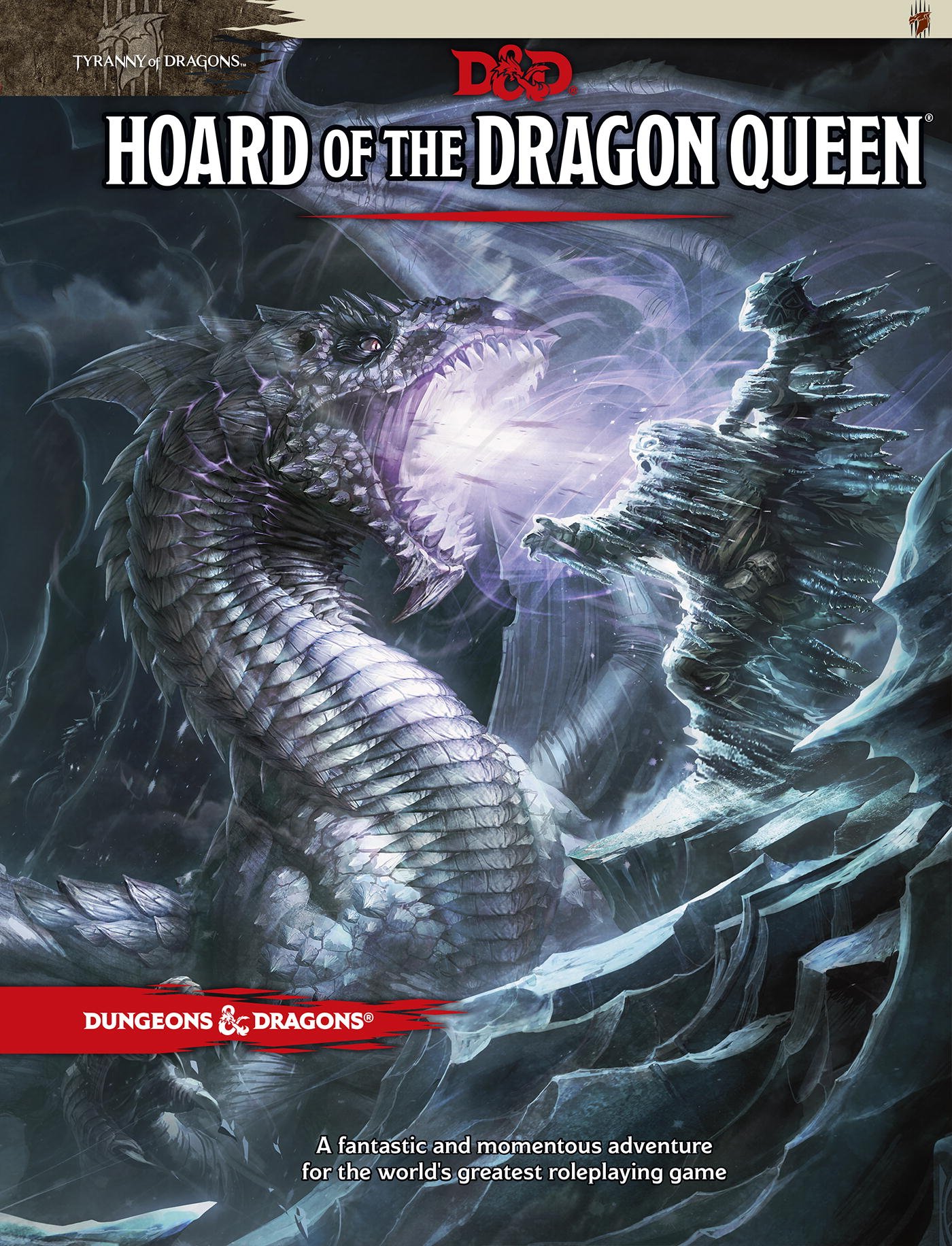
Well, for the second session of "Hoard of the Dragon Queen", I actually tried to figure out who the other members of the party were, so here's the lineup(note, holes in the writer's knowledge may have been filled using some license, artistic or otherwise):


  • Sir Manly of the Holy Turnip(played by yours truly)- a Halfling paladin who is better at roleplaying than at... just about any game mechanic. His squire is a living vegetable with 4 HP and the chutzpa to keep showing him up in combat
  • Pam aka. Drugs- a badass WFRP Dwarf/Alchemist, ported-over from WFRP 1e in the spirit of FLAILSNAILS. Be nice to her and she'll let you touch her stash(mustache--it's funny cause Dwarven women have beards--but it's not funny cause I had to explain it...)
  • Drizzita the Drow- a deadly Drow Archer, recently arisen from the Underdark
  • Lego the Bastard- the Half-Elf Warlock! He likes to electrocute anything with more than 1HD, like Emperor Palpatine with a Taser...

The Prisoners Dilemma


Once safely inside the keep, the party was offered a number of possible missions. One was to fight the dragon assaulting the parapets(fat chance!) We settled on sneaking out of the keep and either rescuing imprisoned townspeople or capturing cultists for interrogation. We ended up doing both.

From there, we defended the keep a bit from a break in the wall and then went out to try and attack the Cultists' leader. Unfortunately, we were headed-off by their second in command and a small army of kobolds. He demanded a champion to face him in single combat. Since Sir Manly is the only thing remotely resembling a fighter in our party, and since he was honor-bound to accept the challenge, he stepped forward, despite considering it a suicide mission. The half-dragon commander beat him bloody but spared his life, in the end.


Game Design Bait & Switch


...and I'm starting to sense a trend here.  Previously, we played a session or two from Dead in Thay, and ran into a similar situation of "Combats That Aren't Combats". We got dropped into the middle of this epic battle with a bunch of NPC's far more powerful than us facing-off against each other and the clear implication of the impossible odds was that this wasn't a real battle.

Now comes Hoard of the Dragon Queen with it's no-stakes challenge fight. Also, we learned afterwards that, had we chosen to take-on the dragon in the parapets, it would have fled after having sustained minimal damage.

I'm sure that any of these encounters on it's own could be defended as being sort of interesting and original ideas, but the net result is that our party is only allowed to fight:


  1. Low-level combats against foes that pose no risk to them
  2. Big dramatic encounters that look scary but really pose no risk to them

Certainly the debate over how to handle campaign lethality in practice is alive and well. But, whatever approach you take, you need to find a balance somewhere between two conceptual extremes:
  1. if there is no reasonable possibility of lasting harm, then the risks PC's take are meaningless and Players will no longer be fooled into feeling tension
  2. if the campaign is too lethal then there is no possibility of PC development and Players will begin to only feel frustration

I can't help but feel that WotC's current game designers don't really understand point #1, although they're hardly alone.


Playing the Hell out of the Paladin


So, here's my dirty little secret--I've never played a Paladin or Cleric before. And here's my other dirty little secret--I'm having a blast!

After somewhat cooling my criticism of Adventure Bonds, I asked myself what Sir Manly really wants out of this visit to Greenest. The answer is obvious, he wants to spread his religion, of which he is currently the only adherent.

So, I role-played the heck out of this premise this past session. Sir Manly convinced the Town's leadership to switch their main crop to Turnips, he sought to convert his cultist enemies, and when confronted by a townswoman who remembered his rather sorry state during his last visit here, he convinced her that he had turned over a new leaf thanks to the redemptive power of the Holy Turnip.

dreaming of a world where turnips and radishes can live in harmony
And Sir Manly's mission has progressed even further thanks to some between-session roleplay(thanks, DM):

  • He used his now lofty status among the townsfolk to commission a shrine to be built to the Divine Turnip on the edge of town
  • His Sentient Vegetable friend will be named Prior Raddish and put in charge of the Shrine's upkeep
  • Sir Manly was inspired to pen the code of conduct for followers of the Divine Turnip on a plaque in the shrine:
    • You can't have pudding unless you eat your Turnips
    • Radishes are not to be trusted(unless they repent)
    • Bountiful Tithes should be given to the nearest Shrine of the Holy Turnip
    • We all hope and pray for the rebuilding of the Temple to the Holy Turnip

And with that, this player will, for now, end this account of his slow descent into madness...

Wednesday, 27 August 2014

On 5e Bonds


OK, let's talk about the "Bonds" provided in "Hoard of the Dragon Queen". I complained previously that giving each party member a personal reason why they should take an interest in the adventure hook is a light-handed form of railroading. Here's the list provided by the module:


  1. Leosin Erlanthar, a wandering monk once saved your life.  He's sent an urgent summons for you to meet him in a small town called Greenest.  Looks like it's time to pay off that debt.
  2. When an orc raid drove your family from your home, the people of Greenest took you in.  Anyone who threatens Greenest is your sworn enemy.
  3. Every five nights, you have a strange sequence of apocalyptic dreams.  The world is destroyed by cold, choking fumes, lightning storms, waves of acid, and horrible fire.  Each time the dream ends with ten evil eyes glaring at your from the darkness.  You fell a strange compulsion to travel to Greenest.  Perhaps the answer to the riddle of your dreams awaits you there.
  4. Ontharr Frume, a crusading warrior and champion of good, is your friend and mentor.  He has asked you to travel to Greenest in search of rumors of increasing dragon activity.
  5. You have heard rumors that your close childhood friend, a half-elf named Talis, has been kidnapped by a strange group of dragon cultists.  Your investigations into the cult have led you to the town of Greenest.  You must save her!
  6. Being the grandchild of a renowned dragonslayer is usually a good way to impress people, but just last week a gang of ruffians attacked you.  You barely escaped with your life, but as you fled the ruffians told you that the Cult of the Dragon never forgets and always avenges.  You're hoping to lie low in a sleepy little town called Greenest, until this blows over.
  7. On his death bed, your father confessed that he had been involved in a group called the Cult of the Dragon.  They paid him to smuggle goods across the Sword Coast.  Wracked by guilt, he begged you to investigate the cult and undo the evil he may have helped foster.  He urged you to begin your search in a town called Greenest.
  8. The dragons destroyed everything you hold dear.  They killed your family and destroyed your home.  Now, with nothing but what you carry on your back and a horrid scar of the near fatal wounds you sustained in the attack, you seek revenge.
  9. You and your family were members of the Cult of the Dragon until your rivals in the cult arranged to wipe you out.  Though they slaughtered your kin, you survived, but they think you are dead.  Now is your chance for vengeance!  Your hit list consists of three names: a human cultist named Frulam Mondath, a half-orc named Bog Luck, and a half-dragon named Rezmir.  You have arrived in Greenest knowing it's next on the cult's list of targets.
  10. You have a secret.  You were once a gold dragon who served Bahamut.  You were too proud and vain, to the point where Bahamut decided to teach you a lesson.  You have been trapped in a weak, humanoid body, with your memories of your former life but a dim shadow.  You remember only one thing with clarity:  Bahamut's command to go into the world and prove your devotion to the cause of good.  If you prove worthy, on your death, you will return to his side in your true form.

Roleplaying & The Agency Paradox


While I think the point about railroading is true, I'd like to push that complaint to the side for the moment. Some DM's don't know how to or aren't interested in running a sandbox. They buy a module and read it and now they want to run it for their group. But they now have a roleplaying problem:

In a sandbox, the PC's enter a dungeon/scenario for their own reasons: to find treasure, to help someone, to impress a girl, because they are curious... As such, roleplaying in that dungeon emerges naturally. Questions of, when to forge on, when to flee, what to look for all follow naturally from the PC's original in-character intentions.

But when the DM just picks a module to run, the roleplaying can suffer. Without a clear in-character motive for entering the dungeon, the players will likely just treat the scenario as a railroad, following whatever seems like the next place the DM wants them to go to be polite. I felt this quite distinctly in our recent WFRP campaign where I just sort of went along with the clues the DM dropped, even though Seigwart and Sigyn really had no reason to be chasing this warpstone meteor across the empire.

Bonds are one solution to this problem. Let's artificially provide characters with the motivations they are missing by not playing in a sandbox. Now "paying back my debt to Leosin Erlanthar" is my motivation. I'm going to want to look for him first and foremost, and the results of that search are going to greatly effect how I roleplay the adventure.

This yields an interesting result. By railroading the PC's into the dungeon with these artificial motivations, you're actually giving them more agency within the dungeon, since the DM has given validation to their in-character motivations. Now, as a player, I can riff-off of those motivations and our play through the dungeon can be driven by the players rather than by DM railroading, as it should be.

So, while my preference is to play/run in a sandbox setting, I think that Bonds are a good thing when that isn't an option.

A More Natural Solution


That said, these Bonds come-off as being rather artificial.
"The dragons destroyed everything you hold dear.  They killed your family and destroyed your home."
"You have a secret.  You were once a gold dragon who served Bahamut."
Really!? We're just throwing some huge world-changing fact in order to justify the party's presence in the dungeon?  It just feels too forced to me.

I could see using this approach on brand-new PCs, but in an existing campaign the DM should use their own creativity and knowledge of the PC's to draw them in.

  1. Don't make-up an NPC that no-one has ever heard of. Instead use an NPC that the party grew close to in previous adventures.
  2. Leave a clue at the end of the previous adventure that leads to the next module you want to run. Like when "Against the Giants" had clues that the Drow were to blame
  3. Don't tell players that "just last week a gang of ruffians attacked you". Instead, set-up the attack previously, maybe several sessions previously. Telling the players "the attack happened" just seems like lazy DMing.

Sunday, 24 August 2014

One Hell of a Gaming Night

The Game Map and a Very Angry Dragon
Well, Thursday night was one hell of a game night.

Kids' Stuff


We started out with a game of Advanced Doggies & Dragons which I ran for my daughter and her cousin. Last time Character sheets were introduced. This time I added a map. Basically, the idea was to have a board-game-sized map along the lines of Games Workshop's Hero Quest, with rooms drawn in as the PC's discover them. Everything was improvised on the spot, the rules, the size/contents of the next room, the dialog. And with kids, your DM dramatization can really shine. At one point my daughter told me "Daddy, this is really scary!"

They tricked a dragon, fought guardsmen, won a Rabbit for a friend, and eventually pulled him from the Dragon's belly before high-tailing it out of the castle with a box of treasure and tummies full of fresh vegetables.

At one point my daughter came up with an interesting way to find the statue referred to in one of the mysterious notes the party had found. While I was negotiating a combat round with her cousin, she grabbed my marker and drew-in a statue in an unexplored area of the map. Then after the combat she said "I'm going here and I find the statue!" Yes, that's right, my progeny takes meta-gaming to a new level!

The Only Gaming Aids You Need

A Game for the Big Boys


In any case, once the kids went to bed, our usual group arrived and it was time for the adult game. This is the DnD Next game that A. has been running recently. I played Sir Manly of the Divine Turnip, the little Halfling Paladin that could. He was joined by Pam the Dwarven Alchemist(ported from WFRP 1e, apparently), some sort of Half-Elf hiding his bastard heritage, and maybe some sort of Magic-User... someone from the group please correct me--my memory of the evening is a bit fuzzy for some strange reason...

Get out of my chair and back in
bed. Dammit--this is why
Daddy drinks!
The game was Hoard of the Dragon Queen and that mean PC's were instructed to choose a "Bond", some back-story element that binds them to the adventure location. Being a sandbox-snob, I wasn't about to go for this sort of back-handed railroading without having some fun. So Sir Manly's was that he had once gotten sick on some bad seafood in the town of Greentree and had dreamed...well let's just say some pretty disturbing stuff, but it included converting the naive locals to the way of the Holy Turnip, so there's that. There was much speculation over what the Paladin had really eaten given that Greenstump is a landlocked town...

(Dramatization) 
In any case, upon approaching the town, the party saw it was on fire, and with a dragon breathing lightning bolts circling overhead. We approached by the brush along the riverside, then fought Kobolds & Cultists and eventually helped some refugees to the keep. Manly's new squire even helped out(his squire is some sort of living Turnip-like vegetable matter, booty from last session which was a rather improvisational puzzle-solving adventure, birthed from A's wonderfully twisted mind--but that's another story.)

So, in short, it was a fun, if somewhat brief session. At one point I even broke the DM's sanity with mere Turnip-related humor, such that he could only laugh epileptically for several minutes straight and nothing else. But I won't take all the credit since VSOP had already stabbed him in the Cerebellum earlier in the session.


Wednesday, 20 August 2014

CROSS IT OVER, MASH IT UP!

So, I just finished reading Tad Williams' unfortunately titled "Otherland Volume 1: City of Golden Shadow". It was pretty good, although the fact that the author couldn't provide us with any closure after 900 pages of suspense was a bit of a disappointing end to the folio. (Although perhaps it's a better strategy for pacing than "Chronicles of Amber" which, in my opinion, got worse with each book because so much had been revealed in previous ones. )

In any case, the narrative starts out switching between 5 or 6 different parallel threads from different genres: fantasy, cyberpunk, thriller, sword & planet. Over time it becomes clear how these stories are related and towards the end of the book many of the book's major characters have met one another.

Crossover Time!


So how about this? What games have I DMed/played-in the last few years? WFRP, CP2020, a few different flavors of DnD. What if you're running a session and then suddenly the PCs meet the party from another campaign, possibly even from another system?

For instance, the Basque Pirates piss-off an insane wizard, who blasts them off to WWII Poland where they have to fight alongside Andre and the gang. Or the WFRP party is sailing along the coast of New Tilia when a freak storm blows them off-course. When the seas calm, the stars look different and then they're set-upon by Basque Pirates. Or our Pendragon characters go off and run into some very disreputable characters, including three mohawk-wearing Dwarves...

Yeah, it's a little zany. But that's the wonderful insanity of Pen and Paper RPG's(and anyway, comic books do it all the time so we should get to too!)

Monday, 28 July 2014

Advanced Doggies & Dragons


Well, the kids are older and it's time Doggie Game got an upgrade. That's right folks, we now have character sheets and the kids made them themselves. You Grognards are going to like these character sheets cause they are small, two-sides-of-a-post-it-note small, in fact. That's just how I roll, folks. I like a character sheet that can be filled out and used with only 15 minutes till bed-time!

Boobie & Pooka with Portraits
Stats: Strength, Speed, and Brains


Character generation was 3d6 in-order and your doggie needs a name and your doggie darn-well needs a portrait!

Well, the two little mongrels got started wandering in the middle of the forest when they ran up against the biggest, meanest lion they ever did see! Boobie tried scaring the lion, but hes not very smart and he didn't manage it. Pooka, on the other hand, chose deception and pretend to be a baby lion. She rolled well, despite having a Brains of 1, and pulled-off the scheme. The lion took her away from the aggressive doggie and put her in it's cave. When it went off to bring her food, she snuck away.

Re-united, the doggies were still lost in the forest. They decided to look for a big friendly bird to take them home. After this well-laid plan was executed successfully, they found their home locked and them without a key. After some searching they found a key and opened the door to find...their mother who scolded them and put them to bed!

Little Brainiacs


You may not have noticed, but all the skill rolls were made with the Brains attribute, to the exclusion of Strength and Speed. Yeah, we got a couple of young thinkers here...

Dice Fetishists from Birth


I like on-the-fly rulings, as well as the moderate amount of haggling that tends to accompany it. But the cruel and unrelenting DM didn't give in to the following haggling session:

Player: A lion? Yay! We get to roll our dice now!

DM: First tell me what your doggie does and then you'll get to roll your dice.

Player: Please can we roll our dice first?

DM: No, you need to tell me what your doggie does first.

Player: But I want to roll my dice!

DM: JUST TELL ME WHAT YOUR BLOODY DOG DOES!

Sunday, 20 July 2014

A Game Within a Game

Wow, who would have thought that starting a second blog and then starting a new job with an almost 2-hours-each-way commute would have been so detrimental for my "Billy Goes to Mordor" output. I never would have guessed...

But, I'm still hanging in there.

So, speaking of never knowing what to expect, I've been reading Tad Williams "Otherland Volume 1: City of Golden Shadow". I picked up this one, together with Robert Heinlein's "Stranger in a Strange Land", while swapping books with a friend. I expected the latter to be great, with it's epic title and cool cover-art, while I didn't have high hopes for "Otherland" with it's over-long title and being by an author I had never read nor had recommended to me. So, of course, I'm loving "Otherland" after I finally gave up on "Stranger" 100 pages in.

A Story Within A Story


Otherland starts out jumping back and forth between a number of apparently unrelated Cyberpunk and Fantasy stories, each of them quite compelling. But, halfway through, it's clear from a number of hints that some(and presumably all) of the stories are somehow related, though it's still largely a mystery how.

One of the narratives I found particularly compelling is that of Thargor the Barbarian. Thargor is fairly standard Swords & Sorcery Barbarian, off adventuring with his buddy Pithlit the Thief. Not quite Fafhrd and the Grey Mouser, but still pretty good stuff. They end up encountering something truly weird and we soon find out that the two are actually young kids playing an MMORPG in virtual reality. The Fantasy adventure quickly becomes a Cyberpunk tale as the kids are sucked into a high-stakes game of intrigue.

The story really plays in with the book's general theme of the strange mixing of realities created by the proliferation of VR and the Net. The youths' RL(Real-Life) personas reflect, but at the same time contrast with, their bad-ass PCs. This is particularly pronounced in "The Deadly Tower of Senbar Flay" where Thargor's bravado and Orlando's cocky confidence as his online avatar, clash so starkly in the following scene where he lies awake in bed, worried his parents will ground him and aware just how vulnerable a child like him would be if the mysterious criminals should come after him in RL.

A Game I'd Like to Run


Typical Gen Y'ers as seen by an aging DM?
I think there's a great basis for an RPG adventure here. Tell your group to make High-Level DnD PCs and start an adventure. Then, once they're sufficiently deep-in (maybe towards the end of the first session) have them hit the anomaly and reveal to them that they are actually kids playing an MMORPG. Then they need to create CP2020 PCs(perhaps using Cybergeneration rules) and they can investigate the anomaly in the MMORPG, online using their computer skills, and in RL. The stakes get increasingly higher since dying in the MMORPG just loses you your current PC, while online activity can get you in trouble with the law and other groups, and in RL you can die, get sent to Juvy, etc.

Thursday, 5 June 2014

Tales of Blood and Glory: A Canticle for Leibowitz

Post-Apocalyptic fiction was a big part of the scifi genre from the 1950's-1970's, courtesy of the Cold War and the widespread fear of Mutual Annihilation. Stories of mutants prowling irradiated wastelands and well-meaning scientists whose efforts are too little, too late. I've stumbled across quite a few post-apocalyptic stories the last few years(Ellison's "A Boy and His Dog" and Leiber's collection "The Night of the Wolf" come to mind) but now I finally got to read Walter A. Miller Jr.'s "A Canticle for Leibowitz". It is probably the most highly lauded scifi tale in the genre, winning the Hugo award for best novel in 1961 and remaining a classic till this day.

"Cantacle" follows the Monks of the Order of St. Leibowitz during three successive epochs:


  1. A few generations after the first Nuclear Holocaust, where we learn their mandate--to preserve the surviving remnant of Human knowledge for posterity
  2. At the dawn of a new Age of Reason, where the Order's mandate approaches fulfillment and it is unclear what the future holds for them
  3. Leading up to the second Nuclear Holocaust, where we learn that their new mandate was to prevent a recurrence of Nuclear Holocaust and in case they fail, to launch a mission to another planet, once again, to preserve the remnants of Human knowledge

Ultimately, the book comes off as a deeply thoughtful meditation on Nuclear Apocalypse, largely from a Humanist-Religious perspective. The exploration of suicide and the comparison to "mutually assured self-destruction" in the final part is quite though-provoking, if not altogether profound. Actually, it's all really good. The dialog between science and religion in the second part. The many Humanist vignettes. The tongue-in-cheek humor throughout.

Quite often, I end these posts in the "Tales of Blood and Glory" series with my thoughts on how to apply it to gaming, but here it's a hopeless case. The only substitute for reading "A Canticle for Leibowitz" is reading "A Canticle for Leibowitz". So seriously, if you haven't read it yet, what are you waiting for? It's just that good!