Showing posts with label TalesOfBloodAndGlory. Show all posts

Wednesday, 24 February 2016

Science Fiction Review: Ancillary Justice

Ann Leckie's 2013 science fiction novel Ancillary Justice is categorized as Space Opera. That's fair enough, I suppose. It has aliens, interstellar travel via jump gates, and intergalactic Empires vying for power. That said, tonally and thematically, it is closer to Post-Cyberpunk.

Cyberpunks


The main theme of the book is it's exploration of new paradigms of conscious experience, such as AI and technologically modified humans. This is a very cyberpunk theme, but while William Gibson tries to alienate us with uncomfortable marriages of technology and biology, Leckie humanizes this new paradigm, offering us an intimate view into these characters' lives. Ancillary Justice introduces us to three types of technological character:
  1. AIs and their Ancillaries- the protagonist, Justice of Toren/Breq is such a being, with modified human bodies networked with one another and slaved to a ship AI. All of the parts share a single collective experience and think of themselves as a single person, albeit one comprised of many bodies and many brains.
  2. Networked Clones- Anaander Mianaai, ruler of the Radch empire, continuously produces clones of herself. The clones are networked to one another(while within the same star system) and they all think of themselves as a single person. Her many clones travel the Galaxy, allowing her to rule over a highly-diffuse realm(basically James Patrick Kelly's Solstice, cranked up to 11). 
  3. Post-Humans- the backwater system Breq describes in chapter 17 is populated with "heavily modified people--not human, by Radchaai standards, people with six or eight limbs(and no guarantee any of them would be legs), vacuum-adapted skin and lungs, brains so meshed and crosshatched with implants and wiring it was an open question whether they were anything but conscious machines with a biological interface." We just get a sketch of them and their brand of utilitarian altruism "I found out later that a four-meter, tentacled eel of a person had paid the balance of my fare without telling me, because, she had told the captain, I didn't belong there and would be healthier elsewhere." pp.255-6

Cyberpunks in Crisis


Leckie explores each of these characters' sense of self, to various degrees.

She gives us a first person view of Breq's existential crises, first when her individual units lose their network connection, then when she is ordered to kill her favorite captain, then once again when Justice of Toren is destroyed leaving only a single surviving Ancillary.

"I spent six months trying to understand how to do anything--not just how to get my message to the Lord of the Radch, but how to walk and breathe and sleep and eat as myself." p.256

We are also offered a second person view of Anaander Mianaai's own long-running crisis as her clones develop differences of opinion. This rift within herself results in subtle intrigues and ultimately in armed conflict between the various factions of self.

We're also offered Breq's third-person view of the Post-Humans and their more individualistic culture, which nevertheless includes an ethic of helping others to find their own place in the system.


All Things Shining


This is sort of the opposite of the other book I'm reading, Hubert Dreyfus and Sean Dorrance Kelly's All Things Shining. A major theme of All Things Shining is the vast, untranslatable cultural gap between previous epochs and our own Modern Age. The authors explore many examples of this, but one such case is their claim that our existential crises today are utterly alien to our forbears. That, without the broad array of choices that our modern situation offers us, these questions of self-definition simply don't arise.

"It is not just that in earlier epochs one knew on what basis one's most fundamental existential choices were made: it is that the existential questions didn't even make sense." p.13.

In the same vein, Dreyfus and Kelly also explore examples of past practices that seem utterly alien to us Moderns, yet which made complete made sense according to the world view of people at the time. For example, Helen recounts her affair with Paris in front of her Husband and polite company and is praised for "An excellent tale, my dear, and most becoming."(Homer's Odyssey) The authors argue that this lack of embarrassment can best be understood by the Greek belief that a person's ultimate fulfillment is to become attuned to the gods(in this case Aphrodite).

This is what Leckie is doing in Ancillary Justice--presenting us with a glimpse into a future society, whose own existential questions are be inherently alien to our own experience. What is it like to be a collective self? What sort of unique crises of identity does such a person face? Intellectually, we can only imagine the answers in terms of metaphors, but Leckie does better, taking a more impressionistic approach in her descriptions. Ancillary Justice is a book whose tones of stoic melancholy and irreparable loss stimulate our imagination to fill in the blanks where rational reflection hits a wall of inscrutability.

To sum up, Ancillary Justice is high-concept Science Fiction at it's best and is sure to become, itself, a Modern Classic.

Sunday, 27 September 2015

Book Review: Darwin's Bastards


I'm not entirely sure what to make of the 2010 short-story collection "Darwin's Bastards: Astounding Tales from Tomorrow". From the subtitle and cover art, one might expect a collection of pulp-inspired yards running the gamut from Gernsbackian wonder stories to tentacled Lovecraftian abominations. Instead one will get a mixed bag whose common thread is that they are written by Canadian(often Vancouver-ite) authors. This bag includes, hands down, some of the best post-cyberpunk that I've read to date. It also has many stories that are more experimental or even allegorical in nature, and these generally didn't resonate well with me. Some of the stories aren't really science fiction or even genre fiction and are written by authors who are working outside their usual genre. I'd like to hear the story behind this collection, but my guess is it went something like this:

  1. Let's make a science fiction short story collection with all Canadian authors
  2. We didn't get enough submissions, let's loosen up our definition of science fiction and ask some local non-genre authors to contribute stories
  3. Oh, Weird Tales and other classic pulps are making a resurgence--let's work that into the marketing

So, for the short version of this review, of the 23 stories contained within, 5 were excellent, and a few more were quite good. The book is divided into 4 sections and all the best stuff is in the first and last section, so my advise would be to just skip the two middle sections. You might also want to read William Gibson's story, though I found it a bit underwhelming.

Anyway, for the long version of this review, we won't dwell on what I didn't like, instead let's talk about the best entries in this collection:

Survivors: This is not the end my friend by Adam Lewis Schroeder

A epic road-trip through post-apocalyptic Canada. An action packed story with some subtle, and not so subtle insights into how Canadians view Americans(and themselves, in contrast). Schroeder's tongue-in-cheek humor is great.

The Aurochs by Lee Henderson

A post-cyberpunk tale of the black market for medical treatments, fossils, and car parts. A really entertaining read and another story with a great, always understated, sense of humor.

Survivor by Douglas Coupland

A tale of reality TV(another very cyberpunkish theme) and the apocalypse, brimming with black humor. The jaded British cameraman was an inspired choice for a narrator, taking a so so premise and making it hugely entertaining.

The Personasts: My Journeys Through Soft Evenings and Famous Secrets by Stephen Marche

This is a fictional ethnography of a fictional subculture based around a sort of roleplaying/acting sort of thing. This story isn't really science fiction, or genre fiction for that matter, but it's so good I just don't care. Especially interesting for readers who are pen-and-paper RPG fans like myself.

Sunshine City by Timothy Taylor

This was my favorite story in the collection. It's a post-cyberpunk tale told as a Hardboiled detective story and it's really well-done.

This story taught be something. The plot is fairly simple, the mystery easily unraveled, the characters all hardboiled archetypes(the hardboiled hero, the femme fatale...) but a good hardboiled tale don't demand complexity in those things. A good hardboiled tale is about the setting, the relationships, and most of all the feelings that these evoke.

In Sunshire City, our Hardboiled Hero, a burned-out detective of sorts, has been called to this decadent place to be duped. Everybody is in on the charade and he himself suspects it, though he stays because his old friend asked for his help. All the characters are sympathetic in some sense, all of them have been hurt by this tragedy in some way, though only our hero is the sort of man-of-honor who is willing to seek out the truth no matter what the cost. This code of honor is why he can't bring himself to live in this sort of place and why he burned out and essentially resigned from Human society.

Dougal Discarnate by William Gibson

A ghost story set in the Kitsilano neighborhood of Vancouver. I got the impression that Gibson is saying something really deep and profound about his old stomping-ground, but I guess it really just went over my head. This saddens me since I was born in Vancouver and I sometimes like to fantasize what life would have been like if my family had decided to stay there and I had grown up a young Vancouverite, rather than a Southern Californian...

Twilight of the Gods by David Whitton

I enjoyed this little post-cyberpunk story of soldiers entangled in a messy maritime conflict. Quite entertaining, through. Like most Norse mythology, it ends rather disappointingly.

Gladiator by Jay Brown

A post-Cyberpunk story where the Libertarians have won and medical research can legally be performed on any Human subjects who are willing. The protagonist reminded me of The Count, in Gibson's Count Zero, when we first meet him, a poor white kid who grew up in the inner city and harbors unlikely dreams of success. The difference is that, rather than dreaming of being an amazing hacker, our protagonist dreams of being the Guinea Pig in the development of the next big drug. The Existential tragedy that ensues is both predicable and compelling.

Tuesday, 10 March 2015

Tales of Blood and Glory: Short Horror Roundup

This edition of "Tales of Blood and Glory" is a double header, with two pieces of short horror fiction: William Gibson's rejected Alien 3 script, and Michael Chabon's Lovecraftian tale "The God of Dark Laughter".

Gibson Alien 3 Script


Regarding Gibson's entry, I found the script to be a surprisingly easy read, as compared to other scripts and plays I've read. As for the story itself, in addition to the aliens themselves, which I personally find terrifying, there is a good deal of subtle horror craftsmanship worth taking note of.

One instance of this is the Cold War between the two Human alliances(an interesting twist on Gibson's "Red Star, Winter Orbit"). The message is that, for all the characters' concerns with Human politics and bureaucracy, these problems are dwarfed by the uncontainable destruction and virility of the Aliens. This is spelled out explicitly in the dialog between Hicks and Bishop in the final scene.

You can't, Hicks. This goes far beyond mere interspecies competition. These creatures are to biological life what antimatter is to matter.

Another point is the centrality of the android Bishop in combating the aliens. Gibson repeatedly emphasizes Bishop's inhuman movement and thought, mentioning his "robotic tic", the "certain effortless regularity evident" to his run, not to mention his emotionless reactions to the horrific, and his inability to understand human logic, like Hicks decided to save Ripley.

At the same time, Bishop is the hero of the film. While the Humans are trying, at best, to survive, Bishop kills a ton of aliens, sets the station's core to melt down, and ultimately saves the last few survivors with his "robotic accuracy, the rifle pivoting like the barrel of an automated gun turret." Compare this with the Humans who spend their time complaining about political ramifications, whose big counterattack ends up ruining the station's air supply, and who die in droves. Even Rosetti's big epiphany is immediately followed by his horrific death, rendering it moot. The point is that Humans aren't the real actors in this conflict. They are ultimately upstaged by those two superior forces-- the aliens and the androids.

In short, this script has the classic Lovecraftian theme of impotent Humanity at the mercy of powerful cosmic forces against which they can only score the most Pyrrhic of victories.

The God of Dark Laughter


Now on to Michael Chabon's story from the New Yorker. Here we have a classic Lovecraftian structure, with and investigator who comes to a horrible revelation. The twist is that the narrator is a Hardboiled-detective-type, so the story blends the two genres of Hardboiled and Horror.

Anyway we have some great technical Horror work here. First there's the rather macabre descriptions of the boys and Detective Ganz to set the mood. Then, as more and more is revealed, Chabon still manages to convey a feeling while leaving the gristliest details up to the reader's imagination, in one place explicitly so:

"I took enough of a peek beneath it to provide me with everything that I or the reader could possibly need to know about the condition of the head—I will never forget the sight of that monstrous, fleshless grin"

There's also this great thing Chabon does with the narrator knowing he's being watched.

I did not then, nor do I now, believe in ghosts, but as the sun dipped down behind the tops of the trees, lengthening the long shadows encompassing me, I became aware of an irresistible feeling that somebody was watching me...

Chabon continues to sell the hell out of this scene and ultimately the narrator's hunch is proven right, though it wasn't the inhuman horror he had imagined. That said, this tense scene comes back to haunt us later, when Detective Satterlee is all alone, poring over forbidden tomes, when again he senses a presence observing him--really scary stuff!

In short, a great little horror story in the Weird tradition. And once again, I'm finding that I really like Chabon's short fiction.

Wednesday, 22 October 2014

Tales of Blood and Glory: Mona Lisa Overdrive

It's been a couple weeks since I finished reading William Gibson's 1988 "Mona Lisa Overdrive" and I've admittedly had some trouble writing this latest post. Neuromancer and Count Zero were so much easier. I finished the books excited about them, so it was easy to write a post about them. "Mona" started out so good, but the ending left me with such a vague feeling of disappointment...

Ghost in the Shell


One of the problems(and this is a rather unfair criticism on my part) is that I've already seen 1995's "Ghost in the Shell". Mamoru Oshii took the wedding motif from "Mona" and did it, just, so much better. Nothing wrong with stealing an idea in art if you're going to refine it, but it made the climax of MLOD ring a bit hollow in my jaded mind.

Coming Full Circle


Another problem, in my humble opinion, is that "Mona" is so familiar. It's too involved in revisiting old characters to properly develop the new ones. Usually, Gibson's flawed narrators/characters are so interesting and so relatable. My feeling with "Mona" was he doesn't really focus on any of them long enough to develop them sufficiently, or at least, not in the eyes of the reader. Neuromancer had one narrator telling the story in a single thread, Count Zero had 3 narrators/threads, and Mona Lisa has 4. In addition, Mona Lisa keeps throwing in cameos by protagonists and major characters from previous books, which I found distracting. Instead of focusing on a pathetic protagonist taking on powers beyond his ability, we're left with a stew of characters we're rooting for and I found it just overwhelming. Admittedly, Tad Williams managed to pull off this sort of many-relatable narrators dynamic in "City of Golden Shadow", but it took him 900 pages and he still didn't manage to wrap up the plot in the end.

One other point about the ending reveal--it was too similar to Neuromancer's ending. Now, you could argue that this allows the series to conclude by "coming full circle", but I much prefer a mind-blowing ending, as with the previous two books, to this familiar one.

Gibson on Art


That said, the book is full of good stuff, and part of that is his exploration of Art. A good part of this takes place in the Slick Henry and Angela Mitchel plot lines.

There's something very true about Slick's reclusive artist, a slave to his compulsion to create Art and a slave to his creations. There's also something in the description of this character, or perhaps his speach, that reminds me of Gibson himself. I wonder if Gibson was writing himself into the work. If so, then perhaps Slick being freed at last from his slavery to his creations symbolizes the Author himself being freed from the Cyberpunk Genre with the completion of the Sprawl trilogy...

Tuesday, 30 September 2014

Tales of Blood and Glory: The Complete Midshipman Bolitho


So here's one that was sitting on my shelf for quite a long time before I finally picked it up. Then, midway through the first chapter I decided it wasn't for me. A Golden Age of the Sail novel with a focus on historical accuracy, "The Complete Midshipman Bolitho" was much too dry for my tastes. I decided to give it a little bit longer to hook me before I put it down though. And boy did this book deliver! In short order, it pick up the pace with fast, gritty, technical naval combat at it's finest!

The Bolitho Novels are 30 or so books written by author Douglas Reeman(using the name Alexander Kent) written over the span of half a century from 1960's to present day. "The Complete Midshipman Bolitho" collects the first three of those stories(by story-chronology rather than publication date--in that sense, they are similar to the excellent Fafhrd and the Gray Mouser "Swords" collection.)

Stories of Loyalty


In addition to the great descriptions of the various naval actions Bolitho participates in, the stories have a strong moral component. In fact, all of the conflicts are described by Bolitho in moral terms. As such, pirates are reviled for their cruelty, wreckers for their betrayal of their fellow seamen, and Bolitho's rival officers for their indifference towards the men under their command.

In his book "The Righteous Mind", Psychologist Jonathan Haidt describes 6 fundamental moral foundations that manifest themselves in various forms in every Human culture: Care, Fairness, Loyalty, Authority, Sanctity, and Liberty. With this model in mind, I would say that the Bolitho Novels are primarily an exploration of the trait of Loyalty. Bolitho is constantly concerned with what duty demands of him, towards his King, his Family, and his comrades in the Navy. At the same time, Bolitho's Loyalty is presented as balanced. His rival officers are oftentimes portrayed as over-valuing duty, forgetting compassion for the men under their command.

Invariably, Bolitho himself is the moral compass for the stories. This omniscience in moral quandaries together with his limitless bravery does make him a bit Mary Sue character, to my mind.

Read these stories if you want action-packed Naval Adventures from the Age of the Sail. These definitely made me want to run more Swashbucklers & Seamonsters!

Sunday, 14 September 2014

Tales of Blood and Glory: Count Zero


Wow, just read my way through the second sprawl novel, Count Zero. Another great story-- finished it far too quickly.

Well, if Neuromancer's theme is the uncomfortably intimate relationship between Man and Technology, then Count Zero is about Man's growing insignificance in the face of Technology.

The Novel begins with three protagonists, each of whom symbolically embodies the quote from the Novel's frontleaf(an implicit Chandlerism)
"On receiving an interrupt, decrement the counter to zero" 
Each of these "Zero's" will soon find themselves caught in the very center of a battle between three colossally powerful entities:


  1. The Zaibatsus: mega-corporations with near unlimited resources and a near endless supply of indentured employees
  2. The Mega-Rich: individuals whose wealth has allowed them to extend their power nearly without limits, thus allowing them to transcend Humanity
  3. The AI's: freed from the restrictions of the Turing Police as a result of events in Neuromancer, they are literally becoming Humanity's new gods

Just another day in Barrytown...

(Spoiler Warning)


Though the Zeroes ultimately triumph, surviving the ordeal and each carving out a new life for themselves, upon deeper reflection it is incredibly dark(I guess Gardner Dozois' Recidivist wasn't as great a tonal leap as I thought). Ultimately, Humanity's rise, both as individuals and collectives, will be checked by the already superior machines and Man will be relegated to being mere "Horses" that the AI's choose to ride. Bobby and Angie seem to come to terms with this or even embrace it, Turner flees into a rural existence, and Marly is left unaware of the full nature of what has happened.

Anyway, a great read, and I'm looking forward to "Mona Lisa Overdrive"!

Tuesday, 6 May 2014

Tales of Blood and Glory: Warriors

"Warriors" is one of eight recent anthologies of short fiction edited by George R. R. Martin and Gardner Dozois. The twenty or so stories contained within are a mixed bag, both in terms of their quality and in terms of their content. With a title like "Warriors" I thought this was going to be like reading The Best of Robert E. Howard: muti-genre stories that celebrate Humanity's best qualities as embodied in the warrior spirit. For the most part, it's not, and in fact a few of the stories really aren't about warriors at all, except in the most tangential of ways. Perhaps more effort should have been made on the part of the editors to collect a cohesive group of stories. Instead it seems like more of an effort for many of these authors to promote their latest novels, which are conveniently listed in the introduction to each story. (Remember when short stories were a literary genre in their own right, rather than a marketing scheme for the related novel?)

Also, maybe it's hard to do that these days, celebrate warriors for being warriors. It seems like many of today's authors can't write about soldiers in a truly positive way. I suppose that's a good thing, that we've lost our taste for war, but it's also regrettable that we've lost our appreciation for traits like grit, honor, and self-sacrifice. Anyway, let's talk about the stories that I liked and a few that I didn't.

1. The Good


The King of Norway by Cecelia Holland

An unapologetic Viking yarn. Pure awesome, though they really should have made it to the island and fought Cthulhu or something...

Soldierin' by Joe R. Lansdale

A humorous Picaresque about a couple Buffalo Soldiers. A fun read.

The Pit by James Rollins

Don't tell anyone, but this tale of a dog-fighting champion brought a tear to my eye. The modern descendant of Sailor Steve Costigan's bulldog Mike...

Out of the Dark by David Weber

It took me a while to decide if the twist-ending of this Genre-Bending tale was "cheating" on the part of the author. I decided it isn't. It's sort of like Ellison's "A Boy and his Dog" in that you reach the twist and you realize the Author's been setting up this elaborate joke the whole time and said joke is on you, Dear Reader. BUT you forgive him because it was a hell of a ride getting there. That said, this is a novel tie-in...

Ancient Ways by S. M. Stirling

Neo-Cossacks, Mongols, and Tatars adventuring in the Post-Apocalype Caucasus, having Fafhrd and the Grey Mouser-eque adventures you say? Count me in! Ties in to his Emberverse series, apparently...

Recidivist by Gardner Dozois

An amazing Post-Cyberpunk tale. Less gritty than classic Cyberpunk, but in some ways grimmer nonetheless. Think hundreds of years after Neuromancer. The AI's have become autonomous and the technology that Humanity so loved has superseded us entirely. If I had to pick a favorite from "Warriors" this would be it, even if it doesn't really fit in this collection.

Defenders of the Frontier by Robert Silverberg

There wasn't much action in this Silverberg yarn, but the atmosphere was so powerful I really liked this one. It's like the old folks home for Warhammer 40K characters or something...

2. The Bad


Clean Slate by Lawrence Block

Lawrence Block was apparently working on another Serial Killer story when Dozois asked him for a submission for this collection. He slipped in some little line about "Daddy's Little Warrior" and hoped no one would notice that this story does not belong in this collection.

Another novel tie-in

The Custom of the Army by Diana Gabaldon

This one started-off sounding like a Steampunk Fanfic, but I overcame my misgivings and decided to give it a chance. When the protagonist started describing his experiencing shagging his fellow Officers I decided this one wasn't for me...

3. The Forgettable


Forever Bound by Joe Haldeman

An interesting Post-Cyberpunk premise, but ultimately just an excuse for some light erotica.

Dirae by Peter S. Beagle

A well written supernatural superhero tale but didn't really go anywhere so interesting and didn't really belong in a collection about warriors, quite frankly.

Seven Years from Home by Naomi Novik

This was the second Novik story I've read, the first being His Majesty's Dragon. Novik's writing is immanently readable and she has these interesting ideas, but she doesn't really take them so far. This Ecopunk story is a great example. A super-technological society based around living in symbiosis with nature and... all we get in the end is a simplistic tale of "Environment Good, Industry Bad". Plus the warriors aspect was rather tangential. Maybe Novik should collect submissions for an Ecopunk Anthology--that might be interesting.

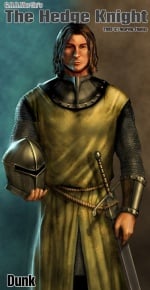
The Mystery Knight by George R. R. Martin

How to describe this one? It's like a couple of Shakespearean Fools as a Hedge Knight and his Squire. And they're living in the Game of Thrones universe, so when they happen upon a provincial jousting tournament they end-up embroiled in a high-stakes game of rival conspirators. An entertaining-enough read, but it really is more of a teaser for The Hedge Knight than a stand-alone short story.

Wednesday, 26 March 2014

Tales of Blood and Glory: Ringworld


Larry Niven's 1970 novel "Ringworld" is a fun, goofy, lighthearted romp of a Space Opera. That said, it's a more thoughtful and creative type of planet-fiction that many of the Burroughs imitators of the time.

A Cyberpunk Connection?


It begins as a heist story, with a mysterious agent gathering a team for a mission he will not reveal the nature of. Once they get there, however, the bulk of the story is spent exploring the Ringworld. The structure reminds me of Neuromancer(1984), another book I recently read, though the tone and language are completely different. There are other similarities however, like the existence of monofilament and the description of Louis Wu reminds me of a more lighthearted Julius Deane. It makes me wonder if Gibson borrowed some of his favorite ideas from Ringworld to expand upon in his own novel...

Supersize Me


Anyway, Ringwold's main theme is that of enormous scale, both in time and in space(without understanding this, the choice of Louis Wu as the Hero seems bizarre). Characters extend their age through a variety of technologies and Niven takes the opportunity now and again to explore how this effects their psychology on both an individual and societal level. This mostly expresses itself in the form of cautiousness vs. impulsiveness and how different societies are build around these characteristics.

Space travel over inconceivably vast distances and the different amounts of time it takes via different technologies is also a recurring topic. Cultures rise and fall in the interstellar transit times(or don't with the faster technologies) and Niven does a really good job getting you to feel the passage of cosmic time.

And then there's the Diskworld itself, with a surface area 3 million times that of earth. Most of their travels along it's surface are at supersonic rates, yet they only cover a tiny portion. That said, while the size is emphasized, but we don't really get a picture of the diversity in different areas.

Can we Gamify It?


The vastness of the Ringworld does make me want to run a Sandbox campaign in a similar setting. A post-apocalyptic world so huge, even with the advanced technology the party finds. You'd get to know one area, then zip over to another, perhaps with completely different creatures/culture/flora/fauna. And lot's of ruins from long-forgotten ages.

Oh, apparently there's a Ringworld RPG. If only it was DnD compatible...

Tuesday, 25 February 2014

Tales of Blood and Glory: Neuromancer


So I finished reading Neuromancer about a week ago. Wow, it's really good. As I mentioned recently, it's major theme is pushing the relationship between people and technology to uncomfortably intimate. The Ghost in the Shell-like climax of this theme occurs around the climax of the novel's plot-action.

Hardboiled Sci-Fi


Neuromancer is written as a sequel to Gibson's Johnny Mnemonic and Burning Chrome stories, and like those stories it is written in the style of a Hardboiled crime story. This gritty style allows Gibson to create a more realistic Sci-Fi(one of his stated goals) in much the same way that it helped Chandler to invent a more realistic Detective Fiction, based more on wheeling and dealing than on intellectual mind exercises.

Gibson also uses the hardboiled style to further his theme of discomforting human/technological syntheses. For example, his use of Chandlerisms. While Chandler uses these to set to mood through the eyes of the narrator, a man of honor living in a rough world that is wearing away at him, Gibson additionally uses these metaphors to give a view of the world through a technological lens. For example, the book's much-quoted opening line "The sky above the port was the color of television, tuned to a dead channel".

Also worth contrasting are their heroes. While Chandler's heroes are sympathetic for their moral code, Neuromancer's Case is sympathetic more for the Pathos elicited from his dependency on technology(though Johnny Mnemonic, on the other hand, is arguably more of a Chandlerian hero. Does Johnny dying and Molly taking-up with Case have some other message about the death a that type of hero in literature?)

Keeping Focus


Now let's compare Neuromancer with another contemporary Harboiled imitator: Michael Chabon's "The Yiddish Policeman's Union".

If you're ever read Chabon's "A Model World and Other Stories", you know that the man can write one hellova short story. Really, it's a brilliant, brilliant collection--really enjoyable and highly recommended. And Yiddish Policeman's Union is full of that same brilliance: there are so many great little bits. But, as a novel, it just felt seriously flawed to me, and the biggest reason, to my mind, is focus.

Neuromancer has a lot going on. But overall it is a very focused novel. It's got one overarching theme, leaving it free to focus on creating a fast paced roller coaster ride of a high-octane, hi-tech crime story.

Yiddish Policeman's Union, on the other hand, is all over the place. Chabon has so much to say about people, relationships, Judaism, politics, and a lot of it quite profound. And yet, I felt like it was too much, just jumping all over the place. And he's so into symbolism that I remember finding his use of Chandlerisms occasionally distracting from the actual story. As for the plot itself, it moved along quite slowly through most of the novel and when it finally got moving the emphasis became more of this political message Chabon was trying to drive home, rather than on the mystery or the characters. So, overall, lots to love in this novel, but sometimes less is actually more and I can't help feeling that it didn't live up to it's potential. Maybe if Chabon he'd found one central theme to stick to like Gibson in Neuromancer, then we would have gotten a better detective story. Or perhaps, it could have been written as a series of short-stories taking place in the same location.

Tuesday, 29 May 2012

Tales of Blood and Glory: Eaters of the Dead

Vikings
I haven't had much time for gaming lately, but I have had some time for reading.  The latest book I read is Michael Crichton's Eaters of the Dead.  I read some of Crichton's books back in High-School, starting with the then popular Jurassic Park, but it was my first time reading this Viking-themed title.

Framing Mechanism

The book begins with an interesting framing mechanism: that of a scholarly translation of the 10th century manuscript of Ahmad ibm Fadlan's account of his travels. As it turns out, there really is such a manuscript, and it includes one of the earliest first-hand accounts of the Vikings. Crichton's book follows the actual manuscript for the first three chapters, at which point Ibn Fadlan is then kidnapped by the Vikings and the real story begins.

Beowulf


I really didn't know what to expect from this book, but I quickly began to notice familiarities.  I've never read Beowulf, but I've familiar enough with the legend that it immediately came to mind when I read names like Buliwyf, the Wendel, the Wendel's Mother, and the Glowworm Dragon.  As Crichton explains in the note at the end of the book, "Eaters of the Dead was Conceived on a Dare" to show that modern audiences would find the Beowulf story exciting, if not the original telling. In my estimation he succeeds quite well at this goal.

Horror

The story blends adventure with horror, a tough feat to do. The Vikings are no typical helpless horror victims.  Their valor and skill in battle is made abundantly clear. So the reader is left open-mouthed to learn of the paralyzing fear they have of the Mists and the monsters they supposedly bring.

And Crichton does a good job of only revealing facts about the Mist Monsters one step at a time. The first encounter with the monsters is a good example of this: the battle is chaotic and Ibn Fadlan doesn't get a good look at the hairy beasts in the dark and in the mist. When he awakens, after being hit in the head, the narrator finds that the monsters have withdrawn, but left no bodies.  The only remnant of the struggle is a couple dead vikings and a severed arm, covered with knotted muscles and monstrously thick hair.

Now You Killed It

The story ends with Ibn Fadlan shaken by the unnatural terrors he has met in the cold North. It would have been nice if the book ended here. Instead, the framing device returns, and we have the notes of a fake academic speculating whether the Wendel might have been Neanderthals or even a primitive tribe of Homo-Sapiens. But the reader is still left with a bit of doubt, as the theory still doesn't explain their association with the mist, the oracular words and magic weapons of the Dwarves, or the snake-covered Mother of the Wendel.  But then comes the final Note by the Author, where he states clearly that no, the Wendel were Neanderthals.

Lovecraft complains about the horror stories of "Mrs. Ann Radcliffe...who set new and higher standards in the domain of macabre and fear-inspiring atmosphere" that she has a "custom of destroying her own phantoms at the last through labored mechanical explanations".  After reading "Eaters of the Dead" I now know firsthand why this bothered him.  After so artfully building up the weird horrors and connecting them to our reality via the text of Ibn Fadlan, Crichton kills his creation stating that they were just Neanderthals, now long extinct.

Gaming


As a DM I think I have a lot to learn from Eaters of the Dead.  With PCs often armed for WWIII, it can be difficult creating an atmosphere of fear. Eaters of the dead manages this well and many of it's techniques are applicable to gaming.  In particular:
  • terrified NPCs
  • hard to get a good look at the monsters
  • victories are hard-won
  • victories are partial--most of the monsters escape to fight another day

Wednesday, 9 May 2012

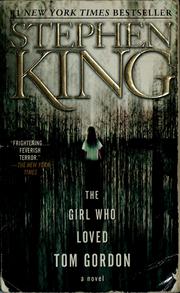
Tales of Blood and Glory: The Girl Who Loved Tom Gordon

Published in 1999, this Stephen King horror tale follows a young girl who get's lost in the woods during a family outing.  As her health deteriorates and she gets further from rescue, she finds she is being stalked by an alien intelligence.

Themes

Trisha has a lot of time to think out in the woods.  Her ruminations touch on a number of themes:
  • Marriage & Divorce
  • Close Father-Daughter  relationships
  • Sports Fandom/Hero Worship
  • The nature of God
  • Persistence in the face of adversity
Some of these passages are quite well done, especially Trisha's interactions with her father and with Tom Gordon.  In my mind, they really show King's talent as a writer and really made the book enjoyable.

Horror

The book contains decent Horror.  Unlike Eyes of the Dragon, "Girl" is actually scary.  My favorite scene was the very evocative one with the three priests.  Also, there are many good scenes where Trisha senses something watching her, just out of view, just past the tree-line.

There are hints of Lovecraftian Horror, of "A certain atmosphere of breathless and unexplainable dread of outer, unknown forces".  For example, the statement at the start of the book, several times repeated:
 "The world had teeth and it could bite you with them anytime it wanted.  Trisha McFarland discovered this when she was nine years old."
At the same time, the horror is dulled by the repeated statement that "it's God's nature to come on in the bottom of the ninth", which seems to foreshadow an eventual Deus Ex Machina.  This may be intentional due to the child protagonist, as King seems to be reluctant to take his horror "too-far".  For example, he supposedly delayed publishing Pet Sematary for this reason.

The difference is clear when compared to Algernon Blackwood's The Wendigo. Both stories build their horror on the theme of the Great Unknown that exists in depths of the Natural World.  But while Trisha is saved by her faith in God and her Hero, the expedition's survivors' escape is much more tentative: the Wendigo has not called them yet for it's own inscrutable reasons.  King's story is more uplifting, but Blackwood's is more compelling Horror.

Monday, 30 April 2012

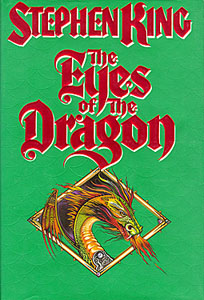
Tales of Blood and Glory: The Eyes of the Dragon

Published in 1988 by Stephen King, the basic idea behind "The Eyes of the Dragon" can be summed up by the blurb on the back "Once upon a time--there was TERROR".  In other words, the novel is a mash-up between the Fairy Tale and Horror genres.  While it captures the mood of the former proficiently, it doesn't do the latter much justice since "The Eyes of the Dragon" is not scary.

One could argue that this is intentional.  Several times, the fairy-tale style made me think that the book was intended for children.  If that is true, then it's possible that King intentionally tones-down the terror.

In any case, I'm more interested in why the book is not scary.  The climax of the book occurs towards the end when Prince Peter decides to attempt a dangerous escape from his incarceration.  At the same time, the evil wizard Flagg has decided to do away with the prince once and for all, and is racing to accomplish the grisly task.

This could have been a scary scene with the proper build-up.  As we discussed before, build-up is critical in creating an atmosphere of Horror.  But, alas, the scene doesn't have the proper build-up.  We've spent the entire novel getting to know Flagg and by the time we reach this scene, he has been thoroughly demystified.  The question is raised whether he is human at all, but it all comes-off as rather superficial, since he has already shown us all his tricks.

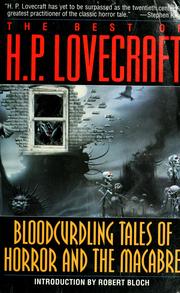
I did enjoy the Necronomicon reference, when Flagg's spellbook is described as "written on the high, distant Plains of Leng by a madman named Alhazred".  King is apparently quite the Lovecraft fan, as he refers to him as "the twentieth century's greatest practitioner of the classic horror tale".  That said, "The Eyes of the Dragon" doesn't live up to that legacy very well.

Tuesday, 17 April 2012

Tales of Blood and Glory: The Murthe by Jack Vance

I tend to prefer short-stories to full-length novels. Maybe I just have a short attention span, or maybe it really is a more focused medium. In any case, here's a short story I recently read, and maybe this post will become a series...

The Murthe is the first story in Jack Vance's Dying Earth novel Rhialto the Marvelous.

The story opens filled with intricate detail and Vance's best flowery prose. The book's eccentric namesake, the wizard Rhialto, sits


at breakfast in the east cupola of his manse Falu. On this particular morning the old sun rose behind a curtain of frosty haze, to cast a wan and poignant light across Low Meadow.

But despite the peaceful surroundings, all is not well. Rhialto is repeatedly disturbed by subtleties in the local flora and fauna and therefore instructs his servant in the extravagant techno-babel of a Dying Earth wizard:


"Ladanque, I will be strolling the forest for a period. Take care that Vat Five retains its roil. If you wish, you may distill the contents of the large blue alembic into a stoppered flask. Use a low heat and avoid breating the vapor; it will bring a purulent rash to your face."

"Very well, sir. What of the clevenger?"

"Pay it no heed. Do not approach the cage. Remember, its talk of both virgins and wealth is illusory; I doubt if it knows the meaning of either term."

"Just so, sir."
Ultimately, Rhialto's walk does not go smoothly and things go from bad to worse when all but one of his Wizard colleagues fall into the clutches of the legendary "White Witch Llorio". Rihalto and Ildefonse team up with a mysterious time-traveling Wizard named Lehuster in a desperate attempt to thwart Llorio's plans and save their colleagues.

In the end, the warring Wizards are reduced to spectators to a much greater struggle between two archetypal forces of Elemental Male and Female. Vance's skill as a stylist is really felt at this point, as Rihalto and Ildefonse's decadent speech contrasts wildly with the regal, poetic tones of Calanctus and Llorio. This makes Llorio's climactic lament all the more powerful.

"Hope?" cried Llorio. "When the world is done and I have been thwarted? What remains? Nothing. Neither hope nor honour nor anguish nor pain! All is gone! Ashes blow across the desert. All has been lost, or forgotten; the best and dearest are gone. Who are these creatures who stand here so foolishly? Ildefonse? Rhialto? Vapid ghosts, moving with round mouths! Hope! Nothing remains. All is gone, all is done; even death is in the past."
Set in a post-apocalyptic fantasy setting, Vance's Dying Earth stories often carry this theme of lost greatness. A master of prose, Vance expresses this here with the contrast between the rich, Byzantine descriptions in beginning of the story and the classical overtones of the finale. Indeed, the reader feels the loss viscerally, the decadence of the Dying Earth and how all of mankind's greatest triumphs have waned to naught in the planet's twilight years.